
The Denver Parade of Homes is a useful place to see new ideas at full scale, but a feature that looks impressive during a 20-minute tour still has to make sense when you live with it every day. In 2026, many of the strongest home design trends are moving away from excess for its own sake and toward intentional spaces, natural materials, wellness, personalization, and features that earn their square footage. For homeowners planning a luxury custom home, the opportunity is not to reproduce a show home room by room but to notice which ideas could genuinely improve comfort, entertaining, organization, and daily routines. The smartest takeaway from this year’s Parade is simple: collect inspiration freely, then be selective about what deserves a permanent place in your home.
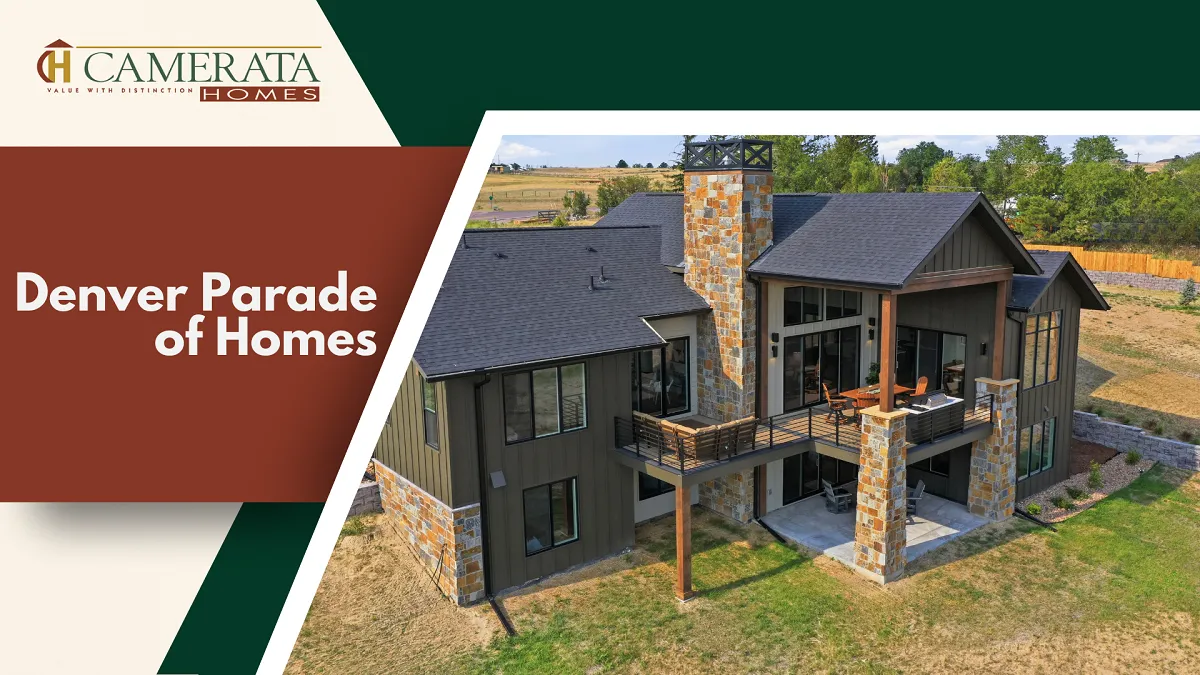
The Parade Is for Inspiration, Not Imitation
Touring a showcase home can make almost anything look irresistible.
A dramatic kitchen catches your attention. A spa suite feels incredible. A hidden room makes everyone stop and take a photo. An oversized entertaining area suddenly seems essential.
Then you return to your own plans and have to answer a harder question:
Would we actually use this?
That is where the Denver Parade of Homes becomes most valuable for someone considering a custom build. Instead of creating a shopping list, use the experience to notice your reactions.
Which kitchen layout made entertaining feel easier? Which primary suite felt calm rather than simply large? Did you prefer connected gathering spaces or rooms with more separation? Which materials still looked beautiful after you imagined living with them for ten years?
Current 2026 home design trends are increasingly centered on this kind of intentionality. Builder Magazine reports that homeowners are prioritizing spaces with clear functional or emotional purposes rather than adding square footage simply because they can. Houzz similarly identifies warmth, longevity, wellness, and personalization as major forces shaping homes this year.
For a luxury homeowner, that is a useful shift.
More is not automatically better. Better is better.
1. The Working Kitchen Is Getting a Beautiful Backstage
The luxury kitchen is changing.
For years, the instinct was to make the main kitchen larger, more open, and increasingly elaborate. Now, many homeowners still want a beautiful gathering kitchen, but they do not necessarily want every part of cooking and cleanup happening in full view.
Enter the working pantry, prep kitchen, or show pantry.
The National Association of Realtors has identified show pantries among the new-construction trends gaining attention in 2026. The concept creates a more polished primary kitchen while giving everyday work somewhere else to happen.
For homeowners who entertain frequently, this can be genuinely useful.
Imagine hosting dinner while small appliances, food preparation, extra dishes, and cleanup remain out of the main gathering space. The primary kitchen can stay connected to guests without having to perform every practical function at once.
But bigger is not automatically better here either.
A secondary kitchen should solve a real problem. If it is located too far from the primary work area or duplicates appliances nobody needs, it can become expensive square footage that rarely gets used.
When touring the Parade of Homes Denver events, pay attention to circulation.
Can you move easily between pantry, kitchen, dining, and outdoor entertaining areas? Is there enough storage where you would actually reach for it? Does the second workspace simplify hosting, or just add another room?
Those questions matter more than the number of appliances.
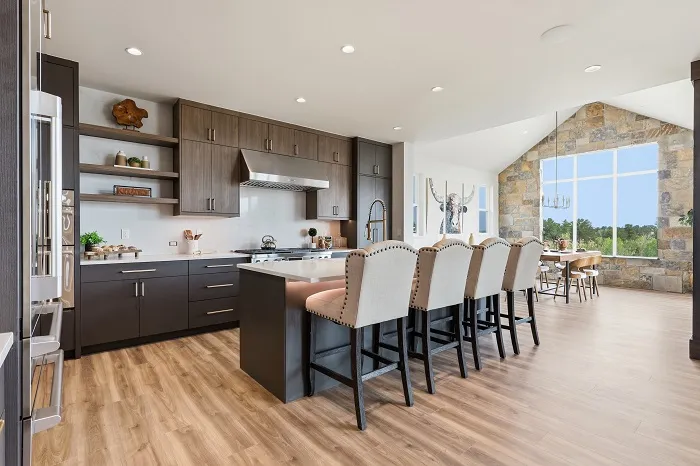
2. Warm Woods and Natural Materials Are Replacing the Showroom Look
One of the clearest luxury home design trends of 2026 is warmth.
Natural wood, stone, textured surfaces, earthy colors, and materials with visible character are becoming more prominent. Builder Magazine has highlighted natural wood tones in kitchens, while broader 2026 trend reporting points toward warmer neutrals, craftsmanship, and materials that feel less sterile.
This is good news for custom homeowners.
A luxury residence should not have to rely on glossy surfaces or dramatic contrast to feel elevated.
Consider natural or softly stained cabinetry, stone with movement and variation, warm metals, tactile plaster, carefully selected wood flooring, and architectural millwork that gives rooms depth.
The trick is restraint.
If every surface is trying to become the focal point, the home can quickly feel busy. A dramatic stone may deserve quieter cabinetry around it. Rich woodwork may be more effective when repeated intentionally instead of appearing differently in every room.
For Denver homeowners, natural materials can also create a subtle relationship with the landscape without turning the interior into a predictable “Colorado” theme.
You do not need antlers and heavy timber everywhere to acknowledge where the house lives.
Texture, material, views, and light can do that more gracefully.
3. Wellness Is Moving Beyond the Primary Bathroom
A large soaking tub and beautiful shower are no longer the entire wellness conversation.
In 2026, homeowners are thinking more broadly about how the house supports recovery, exercise, quiet, sleep, and mental well-being.
Houzz reported that searches for “wellness room” increased 164%, while interest in home gyms, yoga rooms, spas, and biophilic design also climbed. NAR likewise points to natural light, air quality, healthier materials, and flexible wellness spaces as priorities influencing current residential design.
For a luxury custom home, this opens up interesting possibilities.
A wellness area might include a gym connected to an outdoor terrace. A primary bathroom could incorporate steam or recovery features. A quiet room might serve meditation, stretching, reading, or simply uninterrupted time away from the busiest areas of the house.
The key is designing around your routine.
If you exercise every morning, the gym’s location matters. If you use a sauna several times a week, placing it near a shower and changing area makes sense. If quiet is the priority, acoustic separation may be more valuable than adding another piece of equipment.
Wellness works best when it disappears into everyday life rather than feeling like an amenity added for effect.
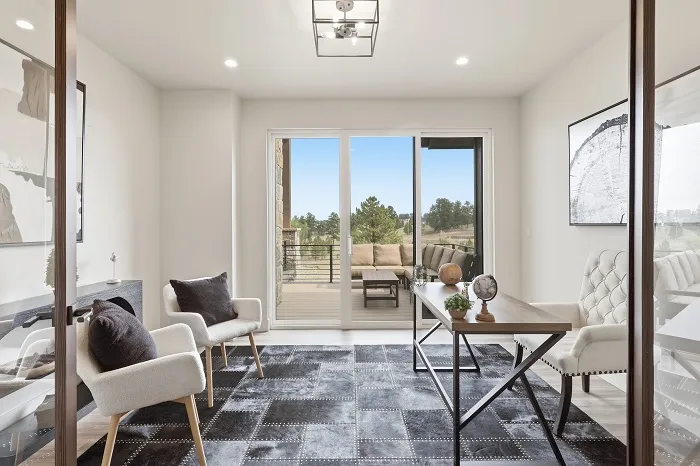
4. Purpose-Built Rooms Are Making a Comeback
The completely open floor plan is no longer the automatic answer to luxury living.
Homeowners still want connection, especially around kitchens and gathering spaces. But there is renewed appreciation for rooms that have a specific identity.
Libraries are a particularly interesting example. Houzz reported a 191% increase in searches for “bibliothèque.” Searches for mahjong rooms, card rooms, board-game rooms, and speakeasies have also increased, suggesting homeowners want dedicated places for slower, more social, screen-free activities.
That does not mean every new custom home needs a mahjong room.
It means personalization is becoming more specific.
If you collect wine, perhaps that deserves a thoughtful tasting space. If your family plays games every Sunday, give that ritual a room. If you work from home regularly, design an office you genuinely enjoy spending eight hours in rather than borrowing space from a guest bedroom.
This is one of the custom home trends Camerata Homes’ audience can use particularly well.
When you are designing from scratch, you do not have to accept generic labels like “flex room.”
You can decide exactly what the room is for.
5. Quiet Luxury Is Showing Up in the Architecture
Luxury is becoming less interested in announcing itself.
Builder Magazine identifies “quiet luxury” among the themes shaping 2026 homes, emphasizing natural materials, craftsmanship, and restraint.
For custom homeowners, this can translate into better architecture rather than simply more expensive finishes.
Think carefully proportioned rooms. Consistent sightlines. Millwork that looks as though it belongs to the architecture. Doors and openings aligned intentionally. Lighting integrated into the room rather than dominating it. Materials repeated enough to create continuity.
These details may not be the first things visitors photograph during a home tour.
They are often the things that make a house continue to feel good years later.
If you are touring the Denver Parade of Homes, try looking past the furniture and décor occasionally.
Study the bones.
Notice ceiling heights, window placement, transitions between rooms, stair design, natural light, and where your eye travels when you enter a space.
Those decisions are much harder to change later than a pendant light.
6. Curves Are Moving From Furniture Into the Home Itself
Curved forms have been appearing in furniture for several years, but in 2026 they are increasingly becoming architectural.
Houzz’s recent search data shows rising interest in scalloped tile, arched range hoods, arched pantry doors, rounded kitchen islands, and curved peninsulas.
Used thoughtfully, curves can soften a large home.
An arched opening can create a graceful transition between rooms. A rounded island can improve circulation while becoming a sculptural centerpiece. Curved cabinetry or walls can make certain spaces feel less rigid.
The important word is thoughtfully.
Adding arches everywhere because they are trending can date a home quickly.
Ask whether the shape belongs to the architecture.
If curves appear in the home’s exterior forms, staircase, openings, cabinetry, and furniture with a clear visual relationship, they can feel intentional. If one random arched doorway appears because it looked good in a model home, it may feel disconnected.
Luxury is often about editing.
7. Outdoor Living Is Becoming More Intentional
Denver homeowners hardly need convincing that outdoor living matters.
The better question is how to make it usable.
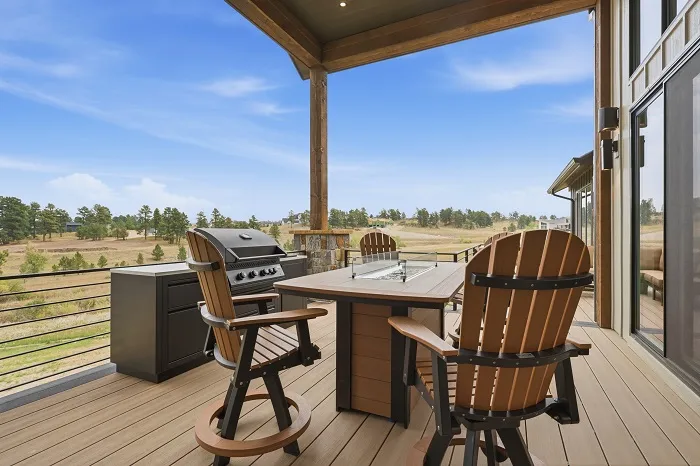
A beautiful patio that becomes unbearable during the hottest afternoon sun is not particularly luxurious. Neither is an outdoor kitchen located so far from the indoor kitchen that entertaining becomes a relay race.
When evaluating outdoor spaces at the Parade, look at how they connect to the house.
Where is the nearest bathroom? Can food move easily from the kitchen? Is there protection from sun or weather? Does the furniture arrangement support conversation? Are there separate areas for dining and lounging? Can the space still feel comfortable when fewer people are using it?
The strongest 2026 home design trends are increasingly concerned with intentional space, and outdoor rooms deserve the same discipline as interiors. Builder Magazine notes that homeowners are prioritizing purposeful design and resort-style amenities while making every square foot work harder.
For a Denver custom home, orientation should also enter the conversation early.
Views matter, but so do wind, sun exposure, shade, and seasonal use.
A spectacular outdoor room should be designed for Colorado, not copied from a home in Southern California.
8. Technology Is Becoming Less Visible
Smart-home technology is not disappearing.
It is getting quieter.
Homeowners increasingly expect lighting, climate control, security, entertainment, appliances, and other systems to be convenient without turning every wall into a collection of controls.
That is an important distinction in a luxury home.
Technology should remove friction.
It should not create another job.
Before adding every smart feature demonstrated at a showcase home, ask whether the system solves a problem you actually have. Will automated shades improve comfort in a glass-heavy room? Would lighting scenes simplify entertaining? Does integrated audio belong in the spaces where you regularly listen to music?
Then think about the future.
Technology changes faster than architecture. Infrastructure that allows systems to be serviced, updated, or replaced can be more valuable than installing the most complicated system available today.
A good custom home builder in Denver should be able to coordinate these conversations with the appropriate specialists while keeping technology integrated with the overall design.
9. Flexible Design Is Becoming a Luxury Feature
One of the smartest things a custom home can do is change with its owners.
That does not mean filling the house with generic multipurpose rooms.
It means considering what might reasonably change over the next ten, twenty, or thirty years.
A children’s study area might eventually become a hobby room. A main-level guest suite could accommodate parents during extended visits and later make everyday living easier for the homeowners themselves. An office may need to support two people instead of one.
Houzz identifies adaptable layouts for aging in place and multigenerational living among the trends shaping 2026 homes, while Builder Magazine notes growing interest in flexible floor plans supporting changing careers, hobbies, and lifestyles.
For homeowners building custom homes in Denver, this is less about predicting the future perfectly and more about avoiding unnecessary limitations.
Thoughtful door widths, main-level living options, storage, adaptable rooms, and accessible transitions can be designed beautifully from the beginning.
They do not have to look clinical.
10. Personalization Is Replacing Perfect Model-Home Styling
Perhaps the most useful trend of 2026 is the move away from homes that look as though nobody actually lives there.
Current design reporting points toward personal expression, sentimental pieces, vintage elements, collections, hobbies, and spaces designed around individual interests.
For luxury homeowners, this is liberating.
Your custom home does not need to look like everyone else’s definition of luxury.
If you own art, design around it.
If Sunday dinner regularly includes twelve people, make the dining space comfortable for twelve. If you collect books, give them architecture rather than shelves added later. If the dogs always enter through one door after a muddy Colorado hike, design that entrance accordingly.
Those decisions are not less sophisticated than choosing an imported stone.
They are what make the home custom.
Five FAQs About the Denver Parade of Homes and Custom Home Design
Question: Is the Denver Parade of Homes useful if I plan to build a fully custom home?
Answer: Yes. The Parade can help you experience room sizes, layouts, materials, lighting, and design features at full scale. Use it to identify what feels right rather than treating any one home as a blueprint for yours.
Question: Which 2026 home design trends have the most staying power?
Answer: Trends tied to everyday function tend to have greater longevity than purely decorative ones. Purposeful kitchens, wellness-focused spaces, natural materials, flexible layouts, quality craftsmanship, and personalized rooms can continue adding value to daily life even after the trend cycle changes.
Question: Should I show Parade of Homes photos to my builder?
Answer: Absolutely. Photos can help communicate what you like, especially when you explain why you saved each image. Tell your builder whether it was the material, layout, proportions, lighting, or overall feeling that caught your attention.
Question: How do I keep a luxury custom home from looking dated?
Answer: Avoid treating every current trend as a requirement. Invest heavily in architecture, proportions, craftsmanship, and materials you genuinely appreciate, then use easier-to-change finishes and furnishings for more trend-driven choices.
Question: When should I start discussing design ideas with a custom home builder in Denver?
Answer: Ideally, before too many major decisions are fixed. Early conversations allow the builder, designer, and homeowner to consider architecture, budget, lifestyle priorities, site conditions, and desired features together rather than trying to fit ideas into the project later.
Make the Ideas Your Own With Camerata Homes
The Denver Parade of Homes can spark ideas, but a luxury custom home should go beyond what is trending. The best design choices reflect your property, priorities, and the way you want to live.
Camerata Homes helps Denver-area homeowners turn inspiration into thoughtful, highly personal custom homes. Ready to create something distinctly yours? Schedule a private consultation with Camerata Homes and start turning your ideas into a home designed around you.