
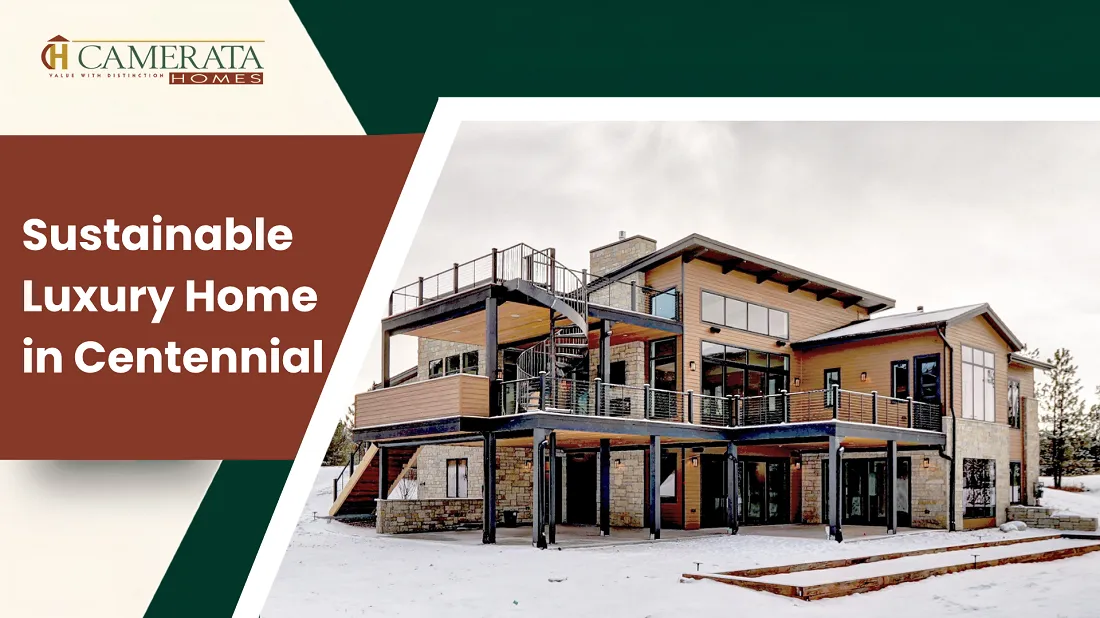
Luxury and sustainability no longer have to compete with each other. In a well-designed custom home, thoughtful material choices can improve comfort, reduce energy use, support durability, and create the refined look homeowners expect from a high-end residence. When planning a sustainable luxury home in Centennial, the goal is not simply to select products labeled “green.” It is to choose materials and building systems that make sense for Colorado’s climate, the property, the architecture, and the way the home will be used for decades.
What Makes a Building Material Sustainable and Luxurious?
Sustainable materials are often evaluated by more than their appearance. Durability, manufacturing impact, maintenance needs, energy performance, sourcing, and expected service life all matter.
Luxury adds another layer. Materials should feel intentional, perform reliably, and contribute to a cohesive architectural design. A beautiful product that needs frequent replacement may not be particularly sustainable, while an efficient material that clashes with the home’s design may not satisfy the homeowner.
The strongest choices accomplish both goals. They look appropriate for the home while improving its long-term performance.
High-Performance Windows and Doors
Windows have an enormous influence on comfort because they separate conditioned interior spaces from Colorado’s changing outdoor temperatures. Choosing high-performance glazing can reduce unwanted heat transfer while helping rooms stay more comfortable throughout the year.
Look beyond the frame material and consider the complete window assembly, including U-factor, glazing configuration, air leakage, and solar heat gain characteristics. Centennial’s current residential requirements include performance standards for windows, making these decisions part of both design and energy planning.
For a luxury home, large glass openings can still be part of the architecture. The key is coordinating window size and orientation with energy modeling, shading, insulation, and the heating and cooling system rather than selecting oversized glazing independently.
Advanced Insulation for Better Comfort
Insulation is hidden once construction is complete, but its performance can be felt every day. A strong thermal envelope helps reduce temperature swings, drafts, and the amount of work required from heating and cooling equipment.
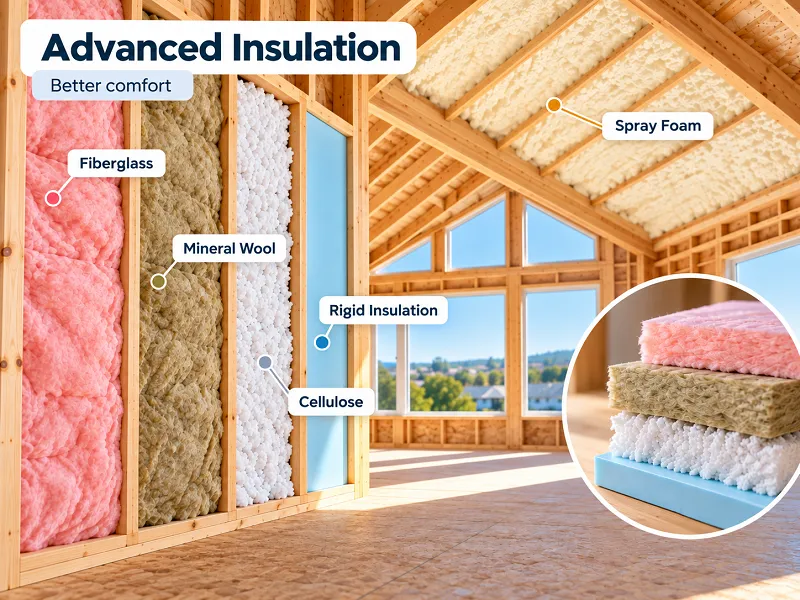
Fiberglass, mineral wool, cellulose, rigid insulation, and spray-applied products can all have appropriate applications depending on the wall and roof assembly. What matters most is designing the entire enclosure properly.
Continuous insulation can also reduce thermal bridging, which occurs when framing members create easier pathways for heat to move through the building envelope. An experienced eco-friendly home builder in Centennial that homeowners work with should consider insulation together with air sealing, moisture management, ventilation, and mechanical design rather than treating each component separately.
Engineered Wood and Responsibly Sourced Lumber
Wood remains essential in residential construction, but sustainability depends partly on how efficiently it is used and where it comes from.
Engineered wood products can provide excellent strength while making efficient use of wood fiber. Structural components such as engineered joists and beams can also help architects achieve wider spans and open interiors commonly associated with luxury homes.
Responsibly sourced lumber is another option worth discussing with your design and construction team. The right material depends on structural requirements, availability, cost, and the architectural vision rather than a single sustainability label.
Durable Exterior Cladding
Exterior finishes need to do more than create curb appeal. Colorado homes experience strong sun, temperature changes, wind, snow, moisture, and occasional severe weather, so durability should influence material selection.
Fiber cement, masonry, stone, metal, and carefully detailed wood products can all contribute to a long-lasting exterior when installed correctly. Consider maintenance expectations alongside initial appearance.
Fire performance may also need attention. Centennial adopted the 2025 Colorado Wildfire Resiliency Code, effective June 30, 2026, with specific material requirements applying to qualifying properties in designated Wildland-Urban Interface zones. Depending on the zone, requirements can include Class A roofing and noncombustible or fire-retardant exterior components.
Material decisions should therefore begin with the property, not just a collection of inspiration photos.
Long-Lasting Roofing Materials
A sustainable roof is one that performs reliably for its intended lifespan while protecting everything beneath it.
Architectural asphalt shingles, standing-seam metal, tile, and other premium systems offer different advantages in appearance, longevity, maintenance, and cost. The appropriate choice depends on roof geometry, structural design, neighborhood requirements, and exposure.
Roof color and assembly can also influence heat gain. Instead of evaluating roofing by aesthetics alone, homeowners should consider ventilation, insulation, drainage, snow loads, and the complete roof system.
Natural Stone and High-Quality Surfaces
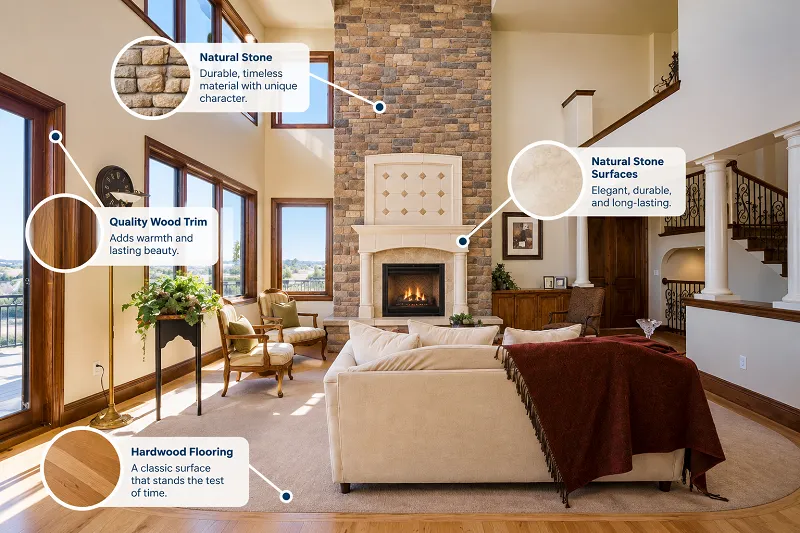
Natural materials can fit beautifully within a sustainable luxury strategy when durability is prioritized. Stone can last for decades and provides a distinctive character that manufactured imitations do not always reproduce.
Countertops deserve similar consideration. Natural stone, engineered surfaces, porcelain, and other durable products each offer different maintenance requirements and environmental tradeoffs.
Rather than choosing finishes solely because they are currently fashionable, consider whether they will still function and look appropriate ten or twenty years from now. Longevity can be one of the most practical forms of sustainability.
Hardwood and Other Durable Flooring Choices
Flooring covers a large percentage of the finished interior, so material selection can influence indoor character and long-term maintenance.
Quality hardwood is popular in luxury homes because it can age gracefully and, depending on the product, may be refinished instead of completely replaced. Tile and stone are useful in areas where durability and moisture resistance matter. Other engineered products may offer stability in locations where natural materials are less suitable.
For homeowners considering energy-efficient custom homes in Centennial, flooring should also be coordinated with the mechanical strategy. Homes using radiant floor systems, for example, require finish materials that are compatible with the system beneath them.
Low-VOC Paints, Adhesives, and Interior Finishes
Some of the smallest material choices can have a noticeable effect on indoor air quality.
Paints, sealants, adhesives, cabinetry, flooring products, and composite materials may release volatile organic compounds. Selecting lower-emitting alternatives can reduce unnecessary indoor pollutants, especially in tightly constructed modern homes.
That does not mean every finish needs to look rustic or visibly “eco-friendly.” Many premium manufacturers now offer sophisticated finishes with improved environmental and indoor-air-quality characteristics.
Materials That Support Efficient Heating and Cooling
Mechanical efficiency starts with equipment, but building materials determine how hard that equipment must work.
High-performing windows, insulation, air sealing, roofing, and exterior assemblies reduce heating and cooling loads. Once those loads are understood, the HVAC system can be designed around the actual home.
This integrated approach is especially important in energy-efficient custom homes in Centennial, where simply purchasing high-efficiency equipment cannot compensate for an inefficient building envelope.
Why Material Selection Should Begin During Design
Waiting until construction to discuss sustainable materials can create unnecessary compromises. Window dimensions, wall assemblies, structural systems, roofing, insulation, and mechanical equipment often affect one another.
Early coordination allows architects, engineers, and builders to evaluate those relationships before drawings are finalized. It also gives homeowners an opportunity to decide where premium materials provide meaningful long-term value and where simpler choices may perform just as well.
Working with an eco-friendly home builder in Centennial early in the process can help residents keep sustainability connected to budget, architecture, availability, and constructability instead of treating it as an upgrade package added later.
Frequently Asked Questions About Sustainable Luxury Homes in Centennial
What materials are best for a Sustainable Luxury Home in Centennial project?
There is no single material package that works for every property. High-performance windows, durable exterior materials, appropriate insulation, quality roofing, low-emitting interior products, and long-lasting finishes are strong areas to evaluate. The best combination depends on the home’s architecture, site conditions, energy goals, budget, and maintenance preferences.
Are sustainable materials more expensive than conventional materials?
Some premium materials cost more initially, while others may have a relatively small price difference. Initial cost should be considered alongside service life, maintenance, energy performance, and replacement frequency. A more durable product can sometimes offer better long-term value even when its purchase price is higher.
Can a luxury home have large windows and still be energy efficient?
Yes, but large expanses of glass require careful planning. Window performance, orientation, shading, air sealing, insulation, and HVAC design should work together. Thoughtful engineering allows homeowners to enjoy daylight, views, and dramatic architecture without treating energy efficiency as an afterthought.
How early should sustainable materials be selected?
Major performance-related materials should be discussed during design rather than after construction begins. Early decisions about windows, wall assemblies, roofing, insulation, mechanical systems, and exterior finishes help the project team coordinate details and identify potential budget or availability issues before they affect construction.
Do sustainable materials require a different architectural style?
Not at all. Sustainable construction can support contemporary, transitional, traditional, mountain-inspired, and other luxury architectural styles. Many of the most important decisions are actually hidden inside the walls, roof, and mechanical systems, allowing homeowners considerable flexibility in how the finished home looks.
Bring Your Sustainable Luxury Home in Centennial to Life With Camerata Homes
Sustainable luxury comes from making better decisions throughout the entire home, not adding a handful of environmentally friendly products at the end. Camerata Homes can help you evaluate materials, design priorities, site considerations, and long-term performance as part of one coordinated custom-home process. Contact Camerata Homes to start planning a Centennial home where thoughtful construction, lasting quality, and elevated design work together.