
Building from the ground up in Aurora gives you something no resale listing can: a home shaped around the way you actually live. It also raises the first question every future homeowner asks. What will it really cost? The answer depends on many decisions, but 2026 pricing patterns offer a reliable starting point.
What Is the Average Custom Home Cost in Aurora, CO in 2026?
Most fully custom homes in Aurora land somewhere between the high six figures and well over two million dollars once structure, site work, and finishes are added together. The spread is wide because “custom” covers everything from a refined ranch plan to a walkout estate with mountain views.
Estimated Construction Costs Per Square Foot
In 2026, construction alone generally runs from about $300 to $450 per square foot for a well-appointed custom home. Luxury projects with premium materials and complex architecture often climb past $550. Treat these numbers as a planning baseline, not a quote.
Sample Budgets by Home Size and Finish Level
Picture a 2,800-square-foot home with quality mid-range finishes. At roughly $325 per square foot, construction sits near $910,000. A 3,800-square-foot design with a chef’s kitchen at $425 per square foot pushes the build toward $1.6 million. A 5,000-square-foot luxury residence at $550 approaches $2.75 million, and that is before you buy the land.
Construction Costs vs. Your Total Project Investment
The per-square-foot number covers only part of your investment. Land, design fees, permits, utility taps, landscaping, and financing sit outside it, and together they can add 20 to 35 percent to what you spend.
What Factors Affect the Cost to Build a Custom Home in Aurora?
Two homes with identical square footage can differ in price by hundreds of thousands of dollars. A few key factors explain most of that gap.
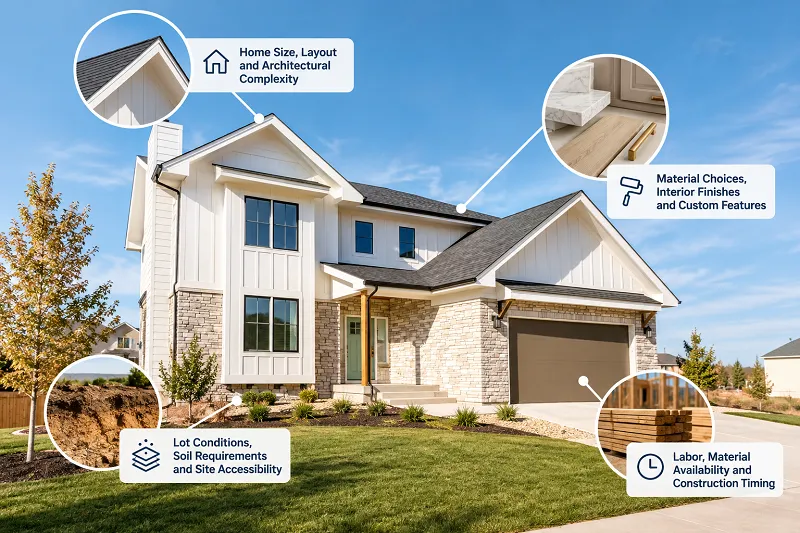
Home Size, Layout, and Architectural Complexity
Bigger homes cost more overall, but complexity often matters more than size. Multiple rooflines, vaulted ceilings, and irregular footprints demand extra engineering and labor. A clean, efficient layout can deliver the same livable space for noticeably less.
Material Choices, Interior Finishes, and Custom Features
Finish selections are where budgets most often drift. Quartzite counters, custom millwork, wide-plank hardwood, and smart home systems each carry a premium. Splurging in a few showpiece rooms and keeping others simpler balances style and cost.
Lot Conditions, Soil Requirements, and Site Accessibility
Aurora’s clay-heavy, expansive soils swell when wet and shrink when dry. Because of this, geotechnical reports often call for over-excavation, engineered piers, or a structural floor. Sloped lots, tight access, and long utility runs add more expense.
Labor, Material Availability, and Construction Timing
Skilled trades remain in high demand across the Front Range, and lead times for windows, trusses, and certain fixtures still fluctuate. Starting in late fall can also add costs for protecting the site through winter.
What Should Your Custom Home Budget Include?
A complete budget covers every stage, from buying raw land to moving in.
Land Purchase and Preconstruction Property Evaluations
Lot prices vary widely by neighborhood, view, and utility availability. Before closing, pay for soil testing and a title review, and read the HOA covenants carefully. That way you know what the property allows and what preparing it may cost.
Architectural Design, Surveys, and Engineering
Architectural fees commonly range from 5 to 15 percent of construction cost. Boundary and topographic surveys, structural engineering, and energy calculations are also needed before permitting can begin.
Permits, Utility Connections, and Site Preparation
Building permits, plan review, and water and sewer tap fees in Aurora can reach tens of thousands of dollars. Clearing, grading, erosion control, and temporary power follow before any concrete is poured.
Foundation, Framing, and Major Building Systems
The structural core takes a large share of the budget. Foundations, framing, roofing, plumbing, electrical, and HVAC are not glamorous, but they determine durability, comfort, and long-term efficiency.
Interior Finishes, Appliances, and Built-In Features
Flooring, tile, cabinetry, appliances, and built-ins like mudroom lockers shape daily life in your home. These allowances are easy to exceed, so review them closely.
Driveways, Landscaping, and Outdoor Living Spaces
Exterior work is often underestimated. Driveways, landscaping, fencing, covered patios, and outdoor kitchens add a meaningful sum. Many HOAs also set deadlines for finishing landscaping.
What Additional Expenses Should You Plan For?
Some important costs never appear on a builder’s line-item estimate.
Construction Financing and Carrying Costs
Construction loans charge interest on the funds you draw throughout the build, often while you are still paying a mortgage or rent. Taxes and insurance on the lot also add up the entire time.
Temporary Housing, Storage, and Moving Expenses
If you sell your current home before the new one is finished, you may pay for a short-term rental, storage units, and two moves over a nine to eighteen month build.
Contingency Funds for Unforeseen Conditions
Setting aside 10 to 15 percent of construction costs protects you from surprises such as buried debris, unexpected soil findings, or sudden material price increases.
Design Changes and Upgrades During Construction
Moving a wall after framing begins costs far more than making the same choice while the plans are still on paper.
How Do Builder Pricing Models Affect Your Budget?
How a builder structures pricing shapes both your risk and your flexibility.
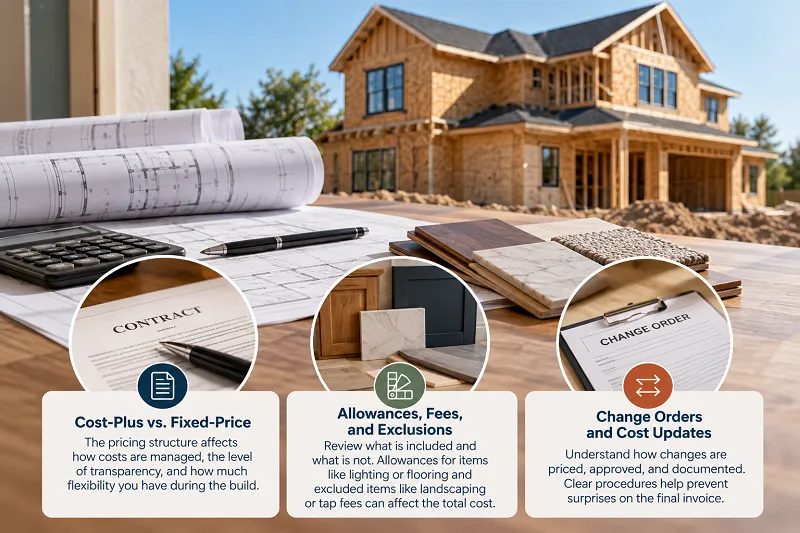
Understanding Cost-Plus and Fixed-Price Contracts
With a cost-plus contract, you pay actual costs plus an agreed fee, which gives you transparency but less certainty. A fixed-price contract locks the number upfront, though builders often add margin to cover their risk.
Reviewing Builder Fees, Allowances, and Exclusions
Read every allowance and exclusion carefully. A low bid may simply set thin allowances for lighting or flooring, or it may leave out landscaping and tap fees entirely.
Clarifying How Change Orders and Cost Updates Are Handled
Ask how changes are priced, approved, and documented. Clear written procedures prevent surprises on the final invoice.
How Can You Manage Costs Without Compromising Your Priorities?
Thoughtful planning protects both your budget and the features that matter most.
Set Your Total Budget Before Finalizing the Design
Set an all-in number before the design is finalized. Designing first and pricing later often leads to costly rounds of redesign.
Separate Must-Have Features From Optional Upgrades
Decide which features are essential, like a main-floor primary suite, and which can wait, like a home theater you finish in a few years.
Make Key Selections Early
Choosing finishes before construction starts makes estimates more accurate and reduces the temptation to make rushed, expensive decisions.
Compare Builder Estimates Using the Same Project Scope
Confirm that every builder is pricing identical plans, specifications, and allowances. Otherwise, the lowest bid may simply be the least complete.
How Can a Custom Home Builder in Aurora, CO Help You Budget?
Bringing in an experienced custom home builder in Aurora, CO early means your budget reflects real local pricing rather than national averages.
Evaluate Your Lot Before Committing to a Design
An early review of soils, slope, setbacks, and utility access uncovers costs that would otherwise surface halfway through the project.
Align Architectural Plans With Your Investment Range
When the builder weighs in during design, square footage, structure, and finishes stay within your target investment. That saves time and avoids redrawing the plans.
Establish Clear Expectations for Pricing, Communication, and Decisions
Agree upfront on how you will receive updates, how decisions are recorded, and how you will hear about pricing changes.
Frequently Asked Questions About Custom Home Costs in Aurora
Does a Custom Home Construction Estimate Include the Cost of Land?
In most cases, no. Builder estimates typically cover the home itself and sometimes certain site work, while the lot is purchased separately. Always confirm whether site preparation, utility connections, and tap fees are included, since these items often fall between land and building costs.
Is It Less Expensive to Build a Custom Home or Buy an Existing Home in Aurora?
Buying an existing home is often cheaper upfront when comparing similar square footage. A new build, however, offers modern efficiency, fewer near-term repairs, and a layout designed around your needs, which can lower renovation and maintenance spending for years to come.
How Much Contingency Should I Include in My Custom Home Budget?
Most homeowners set aside 10 to 15 percent of construction costs. Lots with challenging soils or slopes, or plans with complex architecture, may justify the higher end. Any unused funds can go toward upgrades or stay in reserve once the home is complete.
How Does Adding a Finished Basement Affect the Total Cost?
Basements are common in Aurora, and finishing one usually costs less per square foot than above-grade space because the foundation and shell already exist. Still, expect added costs for egress windows, drywall, flooring, lighting, HVAC extensions, and plumbing for a bathroom or wet bar.
Can I Get a Meaningful Cost Estimate Before Architectural Plans Are Complete?
Yes. A builder can give you a reliable budget range based on your lot details, target square footage, preferred style, and general finish level. The range gets more precise as the plans develop, and it keeps your design decisions tied to a realistic budget from the start.
Planning Your 2026 Build? Discuss Custom Home Cost in Aurora, CO With Camerata Homes
Every great custom home begins with an honest conversation about money. Camerata Homes helps Aurora families understand their true investment, from lot evaluation through the final walkthrough, with transparent pricing and steady communication at every stage. Reach out today to schedule a consultation and start planning a home that fits both your vision and your budget.