
A luxury renovation is not simply an opportunity to replace dated finishes. It is a chance to reconsider how a home looks, functions, and supports everyday life. For homeowners in Centennial, the most successful projects balance refined design with practical decisions shaped by the property, neighborhood, climate, and long-term plans.
Many established homes in Centennial already have desirable qualities, including generous lots, mature landscaping, spacious interiors, and convenient access to the Denver metro area. However, an older layout or a series of previous updates may keep the property from reaching its full potential. A carefully planned luxury home renovation Centennial homeowners can appreciate should preserve what makes the home distinctive while improving comfort, flow, efficiency, and architectural consistency.
Luxury Renovation Begins With a Clear Vision
Before selecting cabinetry, flooring, fixtures, or paint colors, homeowners should define what they want the renovation to accomplish. Some families need a more open and inviting main level. Others want a sophisticated primary suite, a larger kitchen, additional entertaining space, or a stronger connection between indoor and outdoor living areas.
Lifestyle should guide the design from the beginning. Consider how the home feels during a typical weekday, when guests visit, and during Colorado’s changing seasons. A beautiful room that does not support daily routines can quickly become frustrating. By identifying priorities early, the design team can make decisions that feel intentional instead of disconnected.
The vision should also account for the future. A renovation may need to accommodate growing children, frequent visitors, aging family members, remote work, or changing mobility needs. Planning for these possibilities can extend the usefulness of the home without making it feel institutional or overly specialized.
The Existing Home Should Guide the Design
High-end renovation is most convincing when new spaces feel like they have always belonged. That does not mean every original feature must remain. It means the architecture should be studied before major design choices are made.
Ceiling heights, window proportions, rooflines, structural systems, and exterior materials can all influence what is possible. If walls are removed or additions are introduced, transitions should feel natural. Flooring lines, trim profiles, lighting placement, and sightlines deserve the same attention as larger architectural changes.
This is particularly important during luxury home remodeling projects involving Centennial properties with distinctive architecture. A contemporary interior can work beautifully inside a traditional home, but the contrast needs a clear design strategy. Without that consistency, even expensive materials can make a house feel pieced together.
Space Planning Matters More Than Additional Square Footage
Adding space is not always the best answer. Many homes already have enough square footage but distribute it inefficiently. Formal rooms may rarely be used, hallways may consume valuable space, or the kitchen may feel isolated from the areas where family and guests naturally gather.
Thoughtful space planning can dramatically improve the home without expanding its footprint. Wider openings, stronger sightlines, better storage, and more logical room relationships can make interiors feel larger and easier to navigate. Built-in cabinetry can reduce clutter while preserving an elegant appearance.
When additional square footage is appropriate, it should solve a specific need. A carefully designed family room, guest suite, home office, or expanded primary suite can add lasting value. The goal is not simply to create a larger house. It is to make every part of the property work harder and feel more comfortable.
Material Quality Is Only Part of the Equation
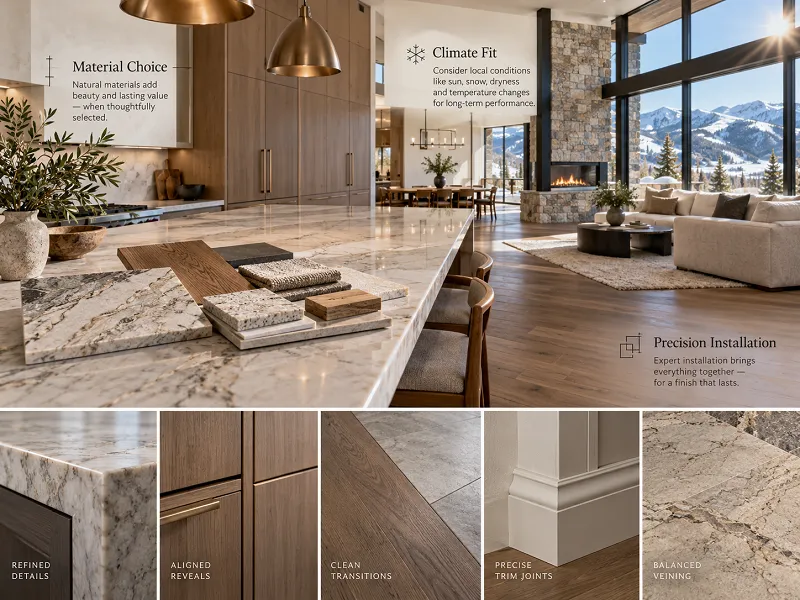
Premium materials contribute to a luxurious environment, but their value depends on how they are selected and installed. Natural stone, custom cabinetry, hardwood flooring, architectural lighting, and handcrafted details can elevate a room. However, luxury is also communicated through proportion, restraint, and precision.
Homeowners should consider how materials will age and how much maintenance they require. Colorado’s dry climate, strong sunlight, snow, and temperature changes can affect wood, exterior finishes, flooring, and other building products. Materials should be appropriate for their location rather than selected for appearance alone.
Installation quality is equally important. Clean transitions, aligned surfaces, balanced layouts, and carefully resolved details distinguish a sophisticated renovation from a cosmetic update. During a high-end renovation, Centennial homeowners should evaluate craftsmanship with the same care they give to finishes.
Kitchens and Primary Suites Deserve Individual Solutions
Luxury kitchens should reflect how their owners actually cook, entertain, and move through the space. Standard layouts rarely provide the best result. Appliance placement, preparation zones, seating, storage, lighting, and traffic flow should be tailored to the household.
Custom cabinetry can provide dedicated storage for cookware, small appliances, pantry goods, serving pieces, and entertaining supplies. Large islands can support several functions, but their dimensions must remain proportional to the room. An oversized island that interrupts circulation will not feel luxurious, regardless of its materials.
Primary suites also benefit from personalized planning. Comfort may come from improved privacy, better natural light, quieter finishes, integrated storage, or a bathroom designed around individual routines. Heated floors, layered lighting, custom vanities, and generous showers can add refinement, but the entire suite should feel cohesive rather than packed with features.
Lighting Should Be Designed Alongside the Architecture
Lighting has an enormous influence on how a renovated home feels. It affects color, texture, atmosphere, and the usefulness of every room. A single layer of recessed fixtures rarely provides enough flexibility for a high-end interior.
A strong lighting plan combines ambient, task, and accent lighting. Decorative fixtures can establish character, while concealed lighting can highlight cabinetry, architectural details, or artwork. Natural light should also be considered throughout the day. Window placement and shading strategies can capture desirable sunlight while controlling glare and excess heat.
Lighting controls allow homeowners to adjust the mood for cooking, working, entertaining, or relaxing. When controls are planned early, switches and interfaces can be placed discreetly and conveniently.
Budgets Should Reflect the Entire Renovation
A realistic budget must include more than visible finishes. Design services, engineering, permits, demolition, structural modifications, mechanical systems, electrical work, custom fabrication, and site protection can represent a significant portion of the investment.
Older homes may reveal hidden conditions once construction begins. Outdated wiring, plumbing concerns, uneven framing, moisture damage, or insufficient insulation can affect the scope. A thoughtful contingency allows the team to address these discoveries without sacrificing important design priorities.
Luxury home remodeling Centennial homeowners undertake also requires disciplined decision-making. Establishing allowances and approving major selections early can reduce delays. It also helps homeowners understand where custom details will have the greatest impact and where simpler solutions may be equally effective.
Communication Shapes the Renovation Experience
A substantial renovation can affect daily routines for several months. Clear communication makes the process easier to understand and manage. Homeowners should know who will provide updates, how decisions will be documented, and what to expect during each construction phase.
A qualified builder should coordinate designers, trade partners, suppliers, inspections, and schedules while protecting the quality of the work. Experienced oversight is especially valuable when a project includes structural changes, detailed finishes, or multiple interconnected spaces.
Strong communication does not eliminate every surprise. It creates a reliable process for responding when conditions change. That confidence is an important part of the luxury experience.
FAQs About Luxury Home Renovation Centennial Projects
How long does a substantial luxury renovation typically take?
The timeline depends on the home’s condition, the complexity of the design, permitting requirements, product lead times, and the amount of structural work involved. A whole-home transformation may take many months after design is complete. Establishing selections early and maintaining clear communication can help prevent avoidable delays.
Should homeowners move out while their home is being renovated?
Moving out may be the safest and most comfortable choice when construction affects kitchens, bathrooms, utilities, or most of the living space. Remaining at home may be possible during a contained project, but homeowners should discuss dust control, noise, access, pets, and temporary facilities with the builder before deciding.
How can homeowners keep a renovated home from looking dated too quickly?
Timeless renovations focus on proportion, architectural consistency, durable materials, and details that suit the home. Trends can still add personality through lighting, paint, furnishings, and other elements that are easier to change. Permanent features should support the property’s character and the homeowner’s genuine preferences.
What should homeowners look for when selecting a renovation builder?
Homeowners should review relevant project experience, communication practices, construction standards, planning processes, and completed work. The builder should understand complex residential renovations and explain budgets, schedules, responsibilities, and potential risks clearly before construction begins.
Start Your Luxury Home Renovation in Centennial With Camerata Homes Today!
Your home should not merely look updated. It should work beautifully, reflect your standards, and feel unmistakably yours. Camerata Homes brings the planning expertise, craftsmanship, and close project coordination needed to transform your existing property with confidence. Contact Camerata Homes today to schedule a consultation and take the first decisive step toward a more luxurious, functional, and lasting home.